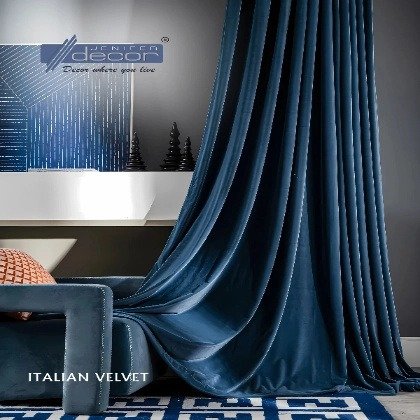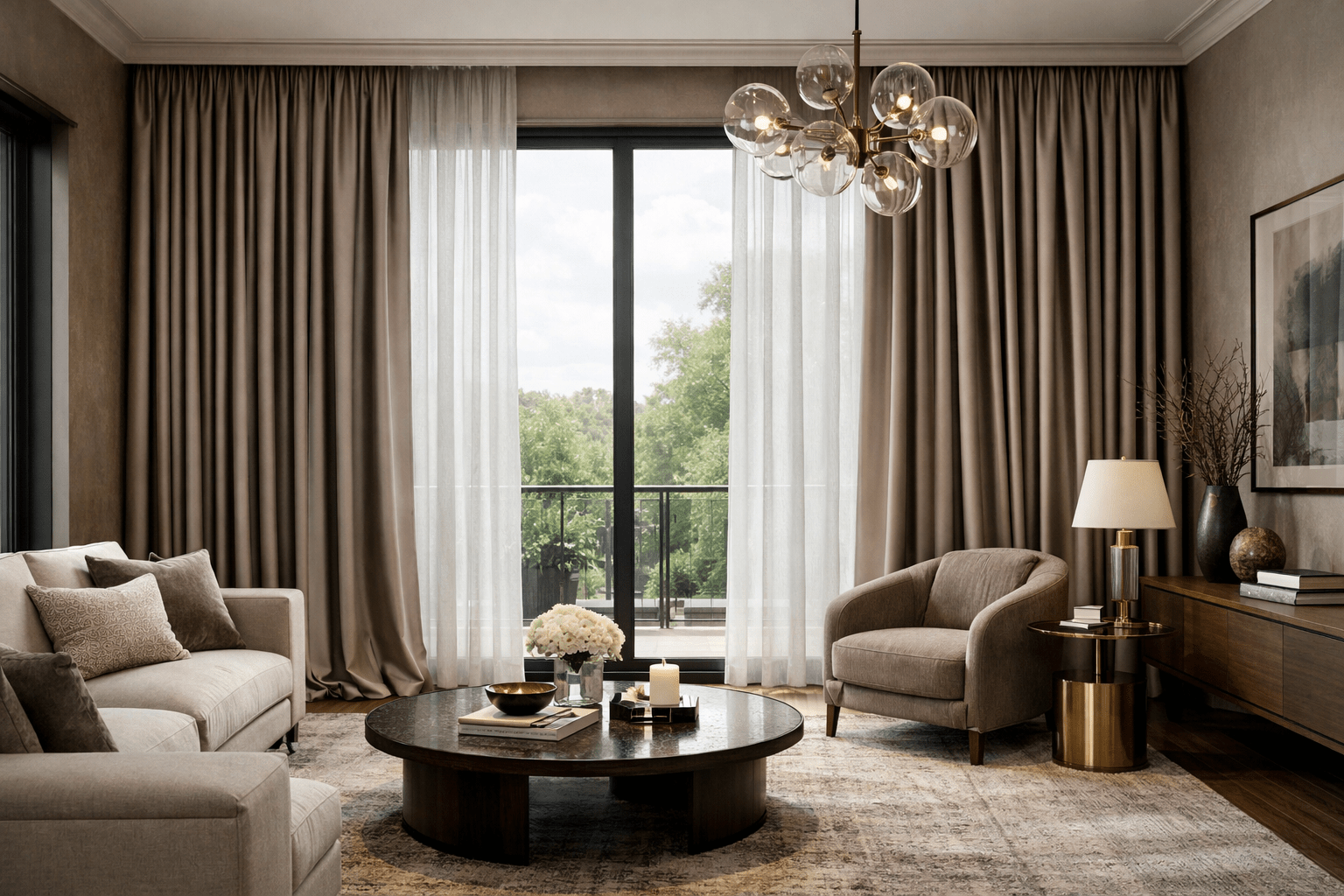

Curtains are not just about fabric and color—the way they are stitched and hung plays a big role in how they look. One of the most important but often ignored factors is curtain fullness.
Curtain fullness refers to how much extra fabric is used compared to the window width. It directly affects how your curtains fall, how rich they look, and how premium your interior feels.
In this guide, you’ll understand how curtain fullness and pleats can completely change the look of your curtains and how to choose the right style for your home.
What Is Curtain Fullness?
Curtain fullness means the extra width of fabric used beyond the actual window size.
For example:
If your window is 5 feet wide and you use 10 feet of curtain fabric, your curtain has 2x fullness.
This extra fabric creates beautiful folds and pleats, giving curtains a more luxurious and finished look.
Why Curtain Fullness Matters
Curtain fullness plays a major role in how your curtains look and function.
- Creates rich and elegant folds
- Makes curtains look more premium
- Improves light blocking and privacy
- Enhances overall room aesthetics
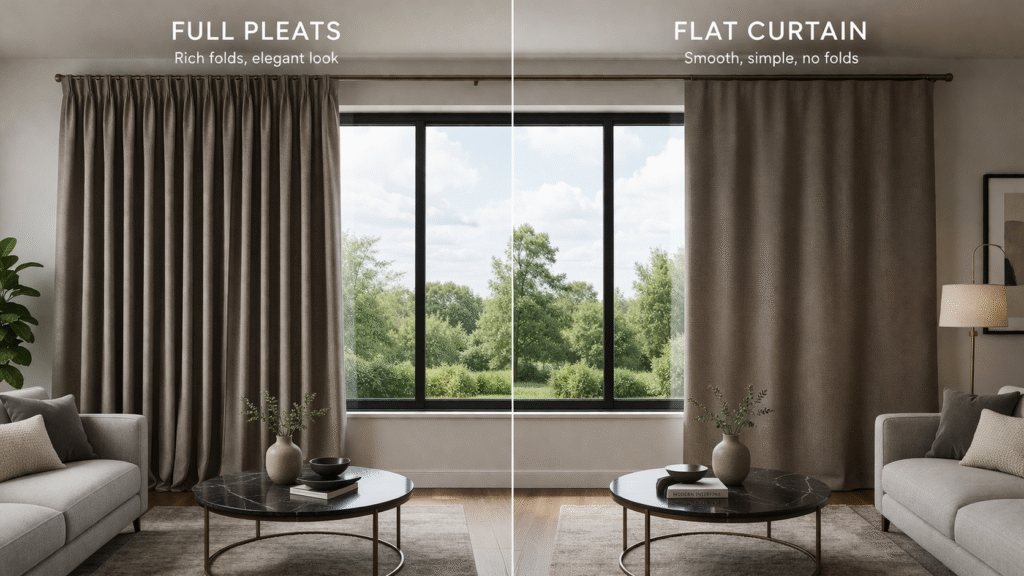
Curtains with less fullness look flat, while well-filled curtains look soft, stylish, and high-end.
Standard Curtain Fullness Ratios
Curtain fullness is usually calculated in ratios.
1. 1x Fullness (Flat Curtains)
- Fabric width = same as window width
- Looks simple but not very attractive
2. 1.5x Fullness
- Slight folds
- Good for basic interiors
3. 2x Fullness (Recommended)
- Perfect balance of style and functionality
- Most commonly used in modern homes
4. 2.5x Fullness or More
- Very rich and luxurious appearance
- Ideal for premium interiors
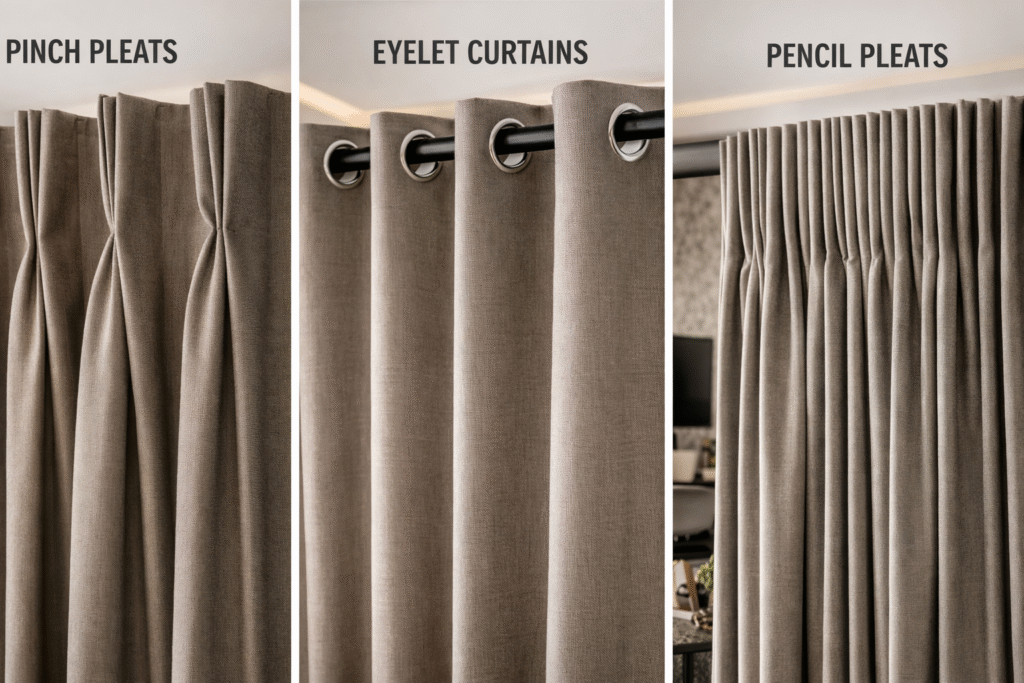
Types of Curtain Pleats
Pleats are folds stitched into curtains that enhance their appearance.
Pinch Pleats
- Classic and elegant
- Best for formal interiors
Eyelet (Ring) Style
- Modern and simple
- Smooth and uniform folds
Pencil Pleats
- Small, consistent folds
- Suitable for everyday use
Each pleat style creates a different visual effect and should be chosen based on your interior design.
How Fullness Changes Curtain Appearance
Curtain fullness can completely transform the look of your room.
- Low fullness → flat and plain look
- Medium fullness → neat and balanced
- High fullness → rich and luxurious
Full curtains create a soft flowing effect, while flat curtains look stiff and less attractive.
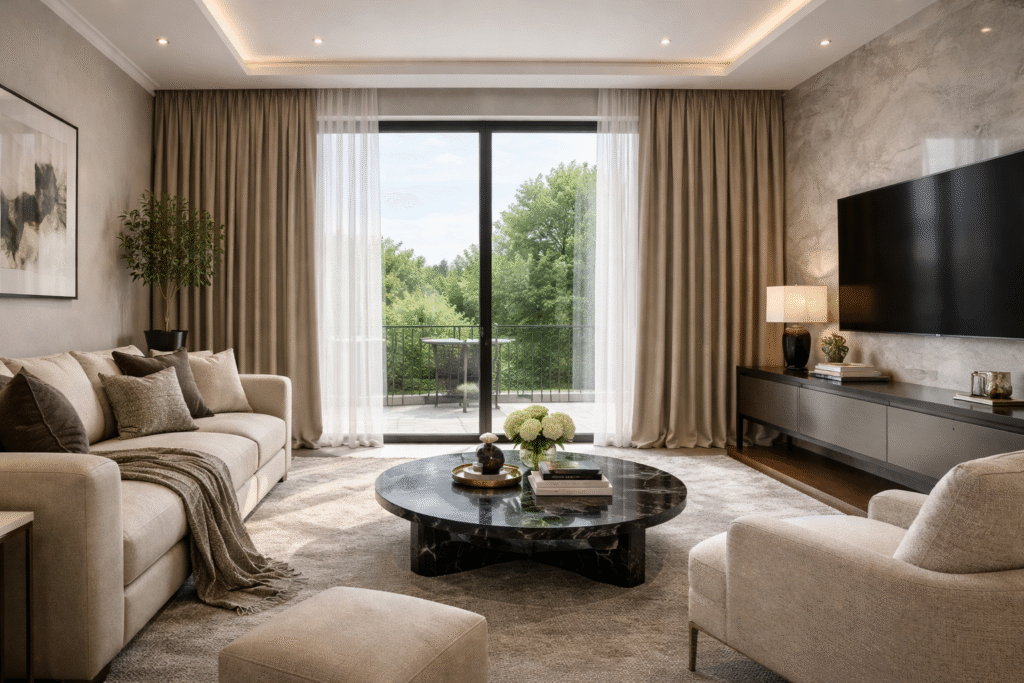
Fullness for Living Room Curtains
Living rooms require a premium and stylish appearance.
- Use at least 2x fullness
- Choose pleated or layered styles
- Combine with floor-length curtains
This creates a grand and elegant look.
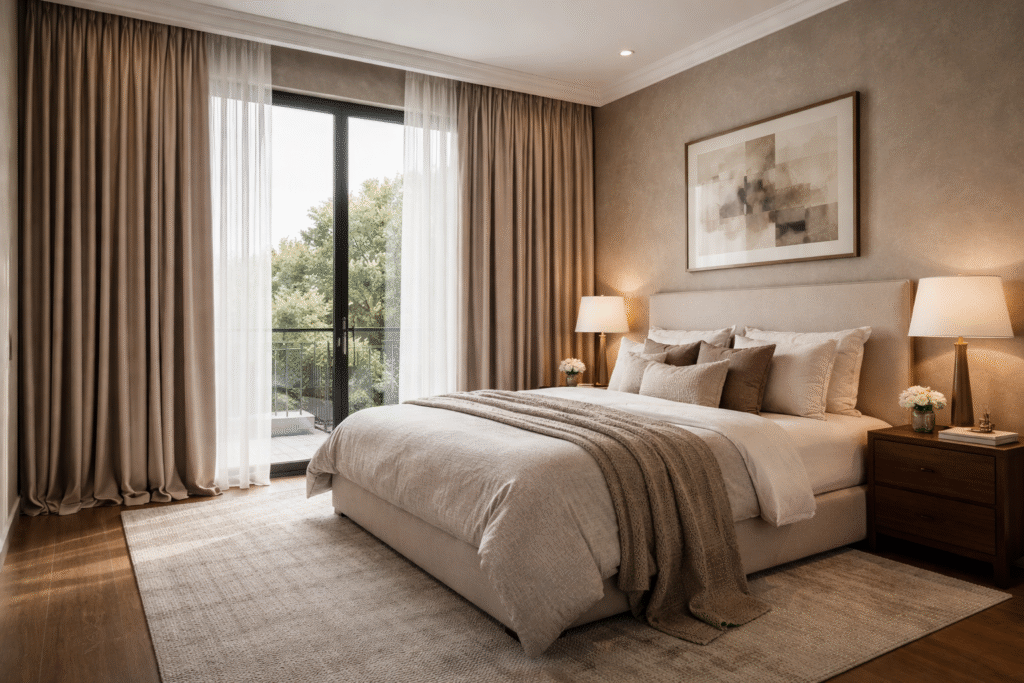
Fullness for Bedroom Curtains
Bedrooms need comfort and functionality.
- Use 1.5x to 2x fullness
- Combine with blackout curtains if needed
- Keep designs soft and relaxing
This ensures both privacy and comfort.
Common Curtain Fullness Mistakes to Avoid
Avoid these mistakes when choosing curtain fullness:
- Using exact window width (no extra fabric)
- Choosing very low fullness for large windows
- Ignoring pleat styles
- Not matching fullness with room design
These mistakes can make even expensive curtains look average.
Tips for Perfect Curtain Styling
To achieve the best curtain look:
- Always choose at least 1.5x to 2x fullness
- Select pleats based on your interior style
- Use high-quality fabric for better folds
- Prefer custom curtains for accurate fitting
Small details like fullness can make a big difference in your interior design.
Final Thoughts
Curtain fullness is one of the most important elements in curtain styling, yet many people overlook it. The right amount of fullness and the right pleat style can turn simple curtains into a beautiful and luxurious design feature.
By understanding how curtain width and pleats work, you can make better decisions and achieve a more refined interior look.
Well-designed curtains with proper fullness don’t just cover your windows—they elevate the entire feel of your home.
Leave a Reply
You must be logged in to post a comment.